How to choose
What to buy first for running and home strength work
The CDC's weekly targets are the shopping list: 150 minutes of aerobic work and 2 strength days. A $300 kit covers both, in this order.
Almost nothing in a sports shop is required. Running needs shoes and the strength half of the week needs something to load the body with, and a very large share of what is sold around those two things is bought in the first fortnight and abandoned by the eighth week.
The useful way to decide is to start from what the week is supposed to contain, then buy only what is in the way of that. This guide uses the CDC's published adult targets as the specification. Every price below is an example used to show the ratio, because this site has no price feed and has tested nothing.
The guidelines are the shopping list
The CDC's adult recommendation is 150 minutes of moderate-intensity physical activity a week, or 75 minutes of vigorous-intensity activity, or an equivalent combination of the two, plus at least 2 days of muscle-strengthening activity each week. It names jogging and running as examples of vigorous-intensity activity.
That splits the problem cleanly. The aerobic half is 75 minutes a week if you run, and running needs exactly one purchase. The strength half is 2 days a week, and it is the half people shop hardest for and start latest.
Written as a weekly plan rather than a wish list, a beginner's week is three runs of about 25 minutes and two strength sessions of about 30 minutes. That is five sessions, and everything in this guide is bought to remove an obstacle from one of them.
| Half of the week | CDC target | What it needs you to own |
|---|---|---|
| Aerobic, vigorous | 75 minutes a week, jogging or running named as examples | One pair of running shoes |
| Aerobic, moderate | 150 minutes a week | Shoes you can walk briskly in |
| Muscle-strengthening | At least 2 days a week | Something to load with, and somewhere to lie down |
The 150 minutes, 75 minutes and 2 days are the CDC's published figures for adults. The equipment column is this guide's reading of what each one actually blocks on.
Shoes are the only purchase the running half requires
One pair, bought to fit, is the whole aerobic equipment list. ASICS, writing about how its shoes wear over time, says you can expect to replace shoes every 300 to 500 miles, which makes a pair a consumable with a known life rather than an investment with a specification.
Fit is the part worth the time, and it is a shop problem rather than a reading problem. Feet swell during a run, which is why trying shoes late in the day with the socks you will run in finds a size that still works at mile 5.
What does not need buying in week one is a second pair, a carbon plate, a watch or compression anything. The budget table at the end holds back an example $25 toward a second pair precisely because rotation becomes useful later rather than immediately.
- Try shoes late in the day, in the socks you will actually run in
- Leave about a thumb's width at the end of the longest toe, which is not always the big toe
- Walk and jog in them rather than standing still on a carpet
- Write the purchase date and the odometer start on the box, because 300 to 500 miles is the life you are tracking
- Buy one pair, not two, until weekly mileage justifies a rotation
The strength half starts cheaper than people expect
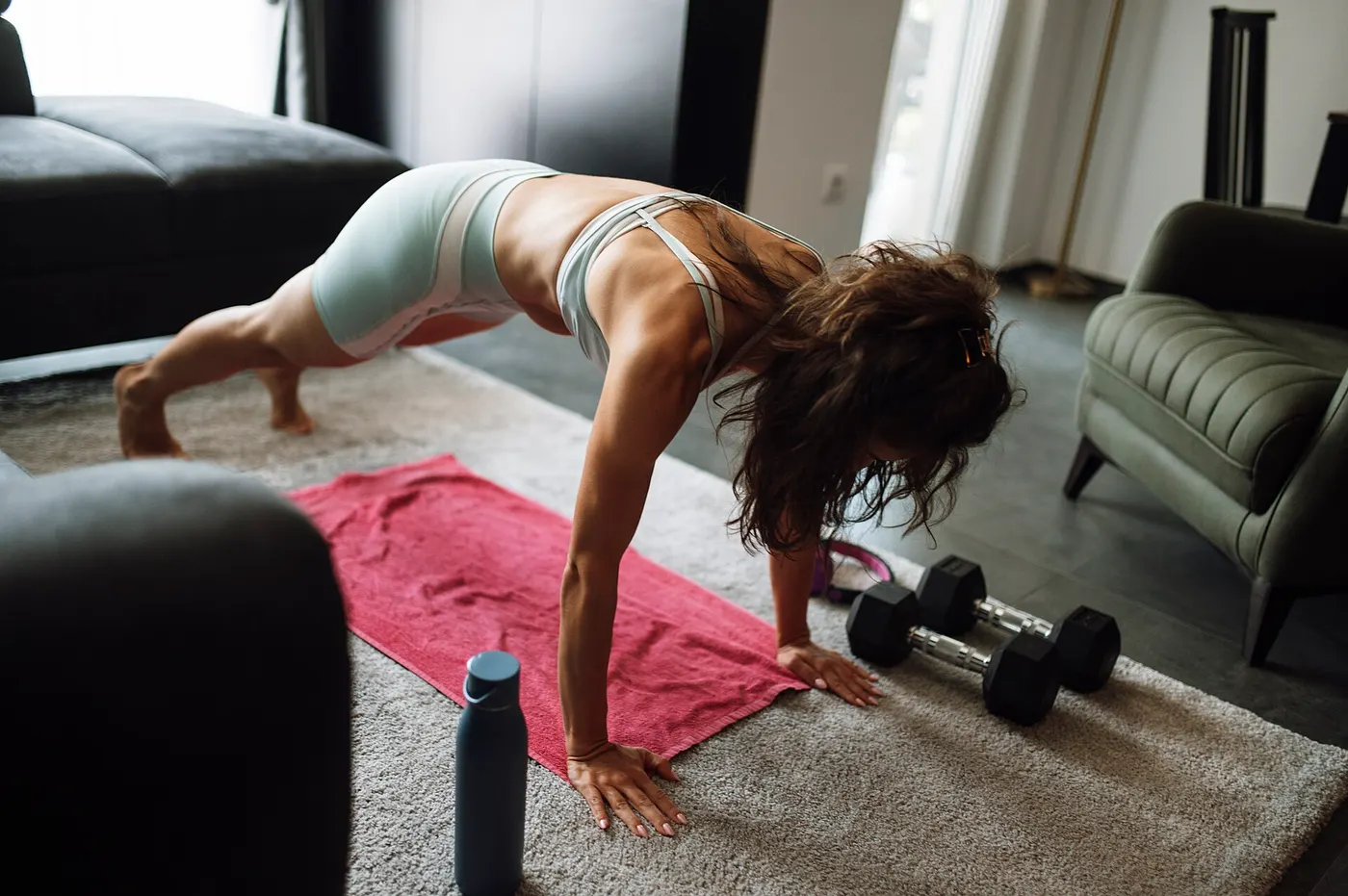
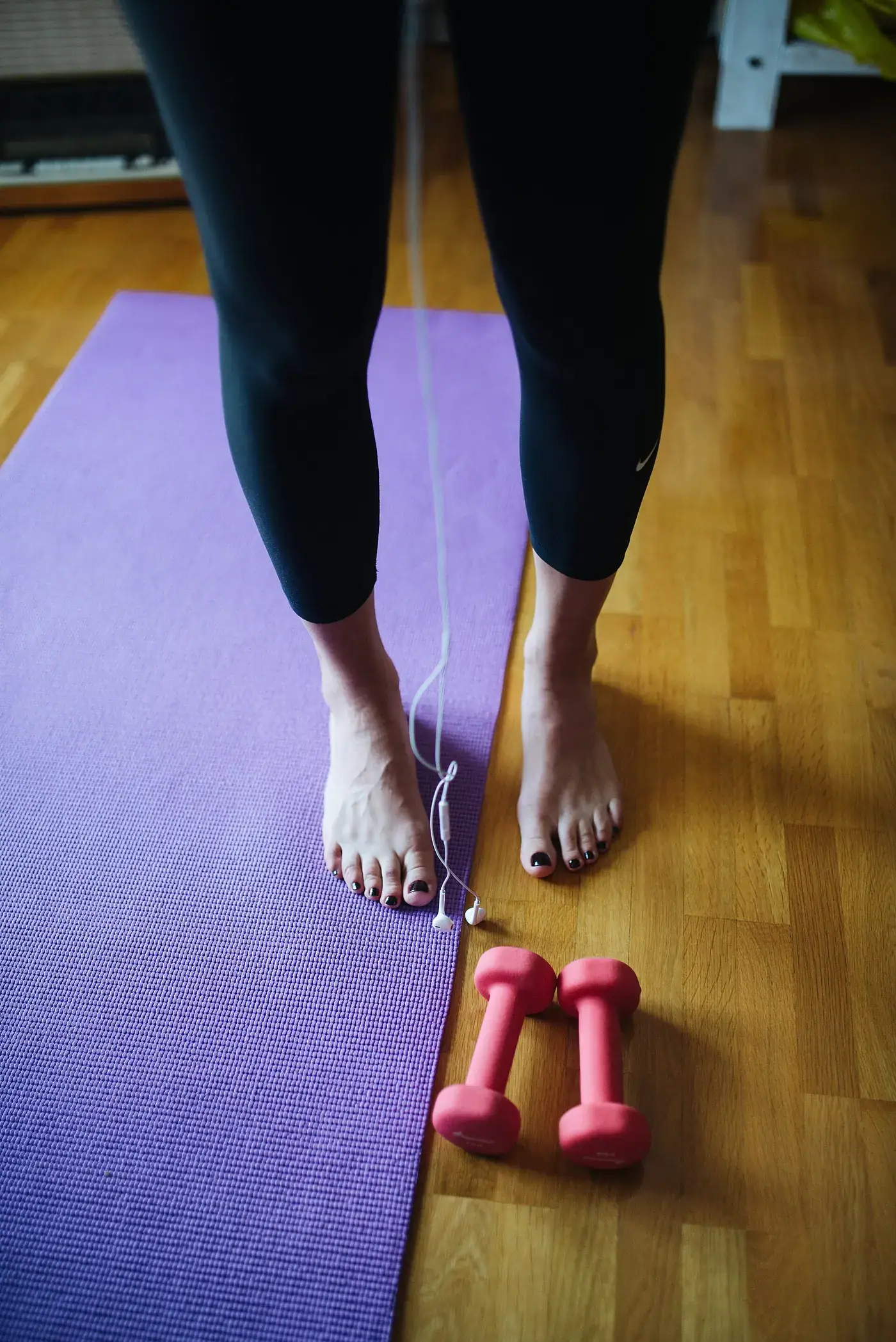
Two days a week of muscle-strengthening work can begin with body weight and a floor. The purchase that actually changes it is one pair of dumbbells, because the point at which press-ups and squats stop being hard enough arrives within a few weeks and nothing else removes that obstacle as cheaply.
A mat is the second item and it is the one people skip, usually because a towel seems to do the job. On a hard floor a towel slides, which turns a plank into a balance exercise and ends the session early. An example $25 mat is a small line against a $300 total.
What to leave until later: benches, racks, cable machines, kettlebell sets, anything that needs a dedicated corner of a room. None of those are in the way of 2 days a week, and all of them are in the way of the next person who has to walk through that room.
| Item | Obstacle it removes | When it becomes worth buying |
|---|---|---|
| One pair of dumbbells | Body weight stops being hard enough | Within the first 6 to 8 weeks |
| Exercise mat | A towel slides on a hard floor | The first session on a hard floor |
| Resistance band | No way to load pulling movements at home | Once pushing movements are established |
| Bench | Some movements need a raised surface | After several months, if at all |
| Fitness tracker | Nothing, in the first 12 weeks | When a training decision depends on the data |
The ordering is by what blocks a session this week, not by what is most useful eventually.
What not to buy in the first 12 weeks
A second pair of running shoes is premature below about 20 miles a week, because two pairs do not last longer in total miles than one pair does. The budget guide on this site works through why rotation costs nothing per mile and doubles the up-front outlay.
A subscription is the other early purchase that rarely survives. On an example $15 a month it is $180 a year, which is more than half the entire $300 starting kit, and it is spent on instruction for sessions you are not yet consistently doing.
Clothing is the one place where a small early purchase pays. Three pairs of technical socks at an example $30 removes the blister that ends week three, and that is a better use of $30 than any accessory in the list above.
A $300 starting kit, itemised
On the example prices below, $300 buys shoes, one pair of dumbbells, a mat, three pairs of socks and a reserve toward the second pair of shoes. Shoes take about 43% of it, which is the largest single share and the one most likely to be cut first.
The reserve line matters more than it looks. Setting aside $25 at the start means the second pair arrives when mileage justifies it rather than when a pair fails, and a pair that fails on a Sunday tends to be replaced in a hurry and at full price.
Scale the whole thing rather than deleting lines. On a $200 budget the same shares give about $86 of shoes, $60 of dumbbells and the rest across mat and socks. Cutting the shoes to fund the dumbbells is the one substitution this guide would argue against, because the aerobic half is the larger part of the CDC's week.
| Item | Example price | Share of $300 | What it unlocks |
|---|---|---|---|
| Running shoes | $130 | 43% | The 75 minutes of vigorous aerobic work |
| One pair of dumbbells | $90 | 30% | The 2 days of muscle-strengthening work |
| Technical socks, 3 pairs | $30 | 10% | The blister that ends week three |
| Exercise mat | $25 | 8% | Floor work on a hard floor |
| Reserve toward a second pair | $25 | 8% | Rotation once weekly mileage rises |
The prices total $300. The percentages are rounded to whole numbers, so they sum to 99 rather than 100.
Before you buy
- Write the week down first: how many aerobic minutes and which 2 days are the strength days
- Buy one pair of running shoes, fitted late in the day in running socks
- Record the purchase date on the box and start counting toward 300 to 500 miles
- Buy one pair of dumbbells at a weight you can press for 8 to 10 repetitions
- Add a mat before the first session on a hard floor
- Buy three pairs of technical socks before buying any accessory
- Hold back about 8% of the budget toward the second pair of shoes
Questions readers ask
- Do I need running shoes if I am only walking?
- Not specialist ones. The CDC's moderate-intensity target of 150 minutes a week is reachable by brisk walking, and any comfortable shoe that fits does it. Running shoes become the required purchase at the point you start jogging, which the CDC classifies as vigorous activity with a 75 minute weekly target.
- Adjustable dumbbells or a fixed pair?
- A fixed pair is cheaper and survives being dropped; adjustable ones cover a wider range in less floor space. The deciding question is whether you expect to outgrow one weight within a few months, because that is the only thing the adjustable mechanism is paying for.
- Is a gym membership better value than buying equipment?
- Price them over a year. An example $40 a month is $480 a year, against a $300 kit that lasts several. The gym wins when you need equipment that does not fit in a home, and loses when the two strength days are the only thing you go for.
- Should I buy a running watch at the start?
- It measures something you are not yet varying. In the first 12 weeks the training decisions are how far and how often, and both can be tracked on a phone or on paper. A watch earns its place once pace or heart rate starts changing a decision you would otherwise make differently.
- How long should the first pair of shoes last?
- ASICS puts the range at 300 to 500 miles. At 10 miles a week that is between 30 and 50 weeks, so a beginner's first pair usually lasts most of a year. Writing the start date on the box is what turns that range into a date rather than a guess.
Sources
- CDC - Physical Activity Guidelines for Adults (150 minutes of moderate-intensity activity a week, or 75 minutes of vigorous-intensity such as jogging or running, plus at least 2 days of muscle-strengthening activity) — checked 2026-11-03
- ASICS - How do running shoes wear over time (expect to replace shoes every 300 to 500 miles; signs of wear listed) — checked 2026-11-03
Some links on this site can earn us a commission. That does not change which product a guide recommends, and it adds nothing to your price. Advertising is not enabled on this site yet. When it is, ads will be labelled and kept visually separate from the guides.